

A senior tech professional in Bengaluru called us last quarter, mid-decision. He had identified a 2,400 sq ft plot in Bangalore's outskirts — well-located, in an approved layout, priced at ₹1.85 crore. He had ₹65 lakh in savings, wanted to take a loan for the rest. He was confused — "Mangesh, I keep hearing 'plot loans are different from home loans.' But I have great salary and CIBIL. Why won't a regular home loan work for buying a plot?"
 Foundational steps: Navigating the unique landscape of plot financing.
The honest answer is — yes, you can absolutely get a loan to buy a plot in India, but it's a different product than a home loan.
Plot loans (also called land loans) have different LTV caps, different rates, different rules on interest rate penalty if you dont contruct a home in 3-5 years, different tenures, and importantly, no immediate Section 24 tax benefit. Most borrowers who walk in expecting "regular home loan terms" for plot purchase are surprised by the structural differences.
This is the first post in our Plot Loans series — 50 articles covering everything from eligibility to construction conversion. Let me walk through the foundational answer first: what is a plot loan, who offers them, and what should you expect?
What Is a Plot Loan, Exactly
A plot loan is a financing product specifically for buying bare land — typically a residential plot in an approved layout where you intend to build a house at some point. It's structurally different from a home loan in five specific ways.
Difference 1: LTV Caps Are Lower
For home loans:
Up to ₹30 lakh: 90% LTV
₹30-75 lakh: 80% LTV
Above ₹75 lakh: 75% LTV
For plot loans:
Most banks cap at 70% LTV
Some go up to 75% for premium customers
A few NBFCs go to 80% in specific cases
For our Bengaluru tech professional, this means: on a ₹1.85 crore plot, maximum loan is ~₹1.30 crore (70%). His ₹1.20 crore loan need against ₹65 lakh down payment was workable but tight.
Difference 2: Interest Rates Are Higher
Plot loan rates are typically upto 0.1-0.25% higher than home loan rates from the same lender. April 2026 ranges across major banks:
The reason banks charge higher rates: a bare plot is harder to recover value from if the borrower defaults. There's no built structure to sell; bare land in some markets has weaker liquidity. Banks price this risk in.
May people opt for Combo loan plot plus contruction loan, they come with rules that if you dont build the home within 3 years of first tranche of loan disbursment or sale deed or possession which ever is earlier, the penalities are heavy. Loan gets classified as commercial loan.
e.g BOB will charge you highest commercial loan int rate. which is 16% from 4th year and recover the penalty for first three years as well.
Difference 3: Tenure Is Shorter
Home loans go up to 30 years at major banks. Plot loans:
SBI: maximum 10 years (most conservative)
HDFC: maximum 15 years
ICICI: maximum 20 years (some cases)
Most banks: 15 years typical
This shorter tenure means higher EMI for the same loan amount.
For our Bangalore plot buyer's ₹1.30 crore loan at 9.0% over 15 years: EMI of ~₹1.32 lakh/month vs ~₹1.13 lakh for a 20-year home loan at 8.5%.
Difference 4: No Direct Section 24 Tax Benefit
This is the big one most plot buyers miss.
Home loan interest: Deductible under Section 24(b) up to ₹2 lakh/year for self-occupied property (assuming you choose old tax regime).
Plot loan interest: Not deductible under Section 24 directly. The interest you pay on a plot loan creates zero tax benefit while it's just a plot.
Section 24 benefit becomes available only after you build a house on the plot and convert the plot loan to a home loan (or take a separate construction loan and combine). Until construction is complete and the property becomes a residence, no tax benefit applies.
For high-bracket borrowers, this is a meaningful difference. A ₹1.5 crore plot loan at 9% generates ~₹13.5 lakh first-year interest. With Section 24 cap of ₹2 lakh, that's ₹60,000 of annual tax savings forfeited (at 30% bracket).
Difference 5: Construction Mandate
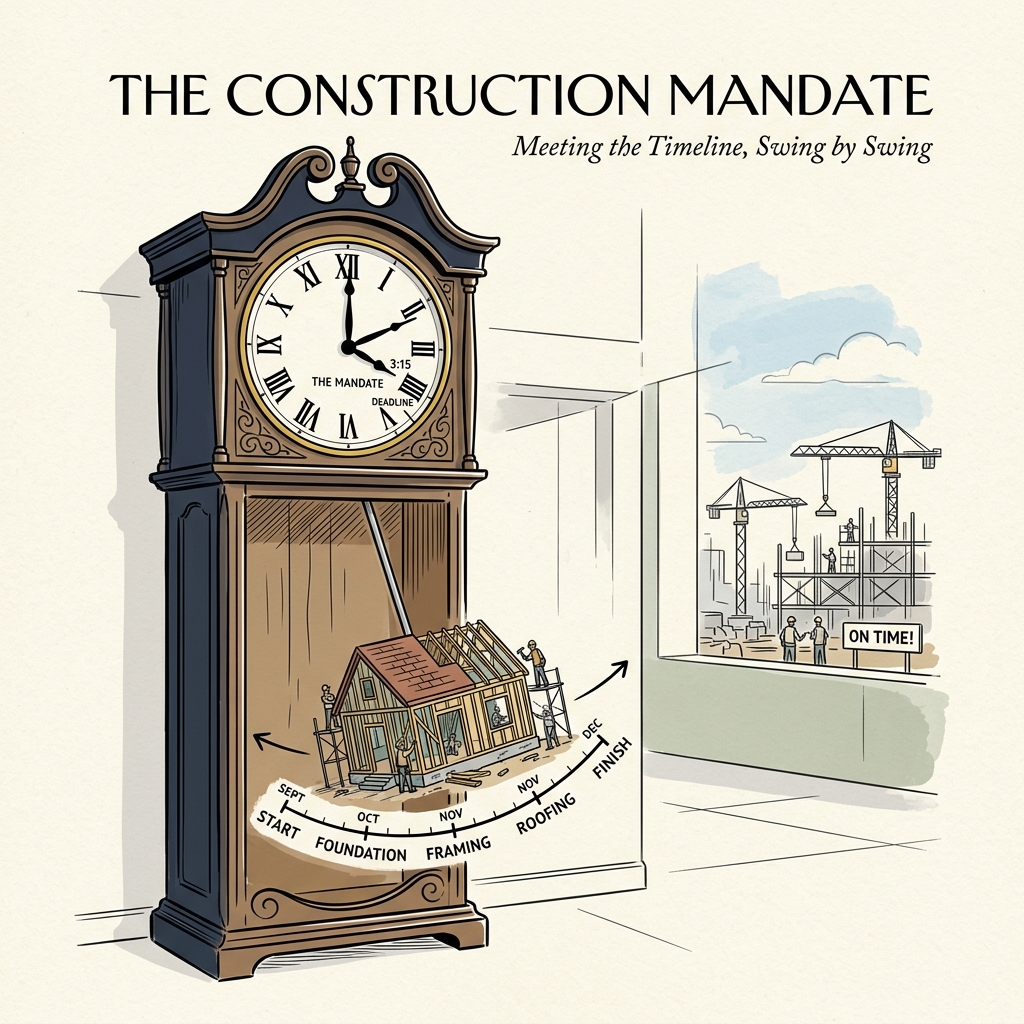 The Ticking Clock: Understanding the construction mandate and timeline.
Most banks require you to begin construction within a specified period after taking the plot loan:
SBI: construction must begin within 3 years of disbursement. Extendable to 5 years subject to approval.
HDFC: typically 3 years window
ICICI: 4 years standard window
If you don't construct within the mandated timeframe, banks can:
1. Increase the rate (penalty pricing)
2. Demand full repayment
3. Refuse balance transfer or top-up
This isn't always strictly enforced for HNI customers with strong banking relationships at Private banks, but it's a contractual term you commit to. Govt banks dont give a flying F if you are HNI or not. They will apply penalty.
Don't take a plot loan if you're genuinely planning to leave the plot unbuilt for 10+ years — get a different financing structure (LAP on existing assets, etc.).
Why Take a Plot Loan vs Other Options
If plot loans are more expensive, why take one? Five legitimate situations:
Situation 1: You Plan to Build Within 2-5 Years
If construction is in your timeline (job stabilization, savings buildup, builder availability), a plot loan funds the land purchase now while you prepare for construction. The plot loan converts to a home loan once construction starts.
This is the most common HNI plot loan scenario.
Situation 2: Investment in Appreciating Land Markets
Tier 1 city outskirts (Bengaluru's North/East corridors, Hyderabad's Western suburbs, Chennai's OMR/Sriperumbudur, Mumbai's Karjat/Khopoli, Pune's Hinjewadi/Wagholi extensions) have shown 10-15% annual appreciation in select pockets.
For HNI customers, plot loans enable participation in this appreciation without locking up full purchase value in cash.
Situation 3: Customisation Beyond Apartment Constraints
Some buyers specifically want to build their own home — custom design, larger spaces, garden, specific orientation. The journey starts with land acquisition. A plot loan is the right product.
Situation 4: Building for Parents / Multi-Generational Family Use
Plots in your hometown to build family homes for parents, or larger plots for multi-family construction — these are legitimate needs that justify plot loans even at higher rates.
Situation 5: Insufficient Cash for Outright Purchase
Even with substantial savings, locking ₹1-2 crore of cash into a plot may not be optimal. Plot loan preserves liquidity for other uses while securing the land.
When NOT to Take a Plot Loan
Three situations where a plot loan is the wrong product:
Wrong 1: You Have No Construction Plans, Just Want Land Investment
If you're genuinely treating it as pure investment with no construction intent, the bank's construction mandate creates real friction. Plus you forfeit Section 24 benefits indefinitely. Consider:
1. Buying outright in cash (if you have it)
2. LAP on an existing property (ironically often cheaper than plot loan)
3. Direct equity in commercial/residential REIT for real estate exposure
Wrong 2: The Plot Has Documentation Issues
Plot loans require especially clean documentation — clear title, approved layout, clean encumbrance, RERA registration where applicable. If the plot has any title issues, you'll face rejection at multiple banks. Resolve documentation first.
Wrong 3: Agricultural Land
Most mainstream banks don't offer plot loans for agricultural land due to state-specific legal restrictions. Cooperative banks sometimes do at much higher rates with case-by-case approvals. We'll cover this in detail in our agricultural land post.
What Plots Banks Actually Fund
Five plot categories that banks consistently fund:
Category 1: Approved Residential Layouts in Urban Areas
DTCP-approved layouts (Tamil Nadu, Karnataka), DDA/HMDA/BDA-approved (Delhi, Hyderabad, Bengaluru), TPS-approved (Maharashtra), and similar municipal-approved layouts. These are the cleanest plots and command best loan terms.
Category 2: RERA-Registered Plot Projects
Larger plot developments by reputable developers, registered with RERA, with proper layouts and amenity provisions. Often easier to fund than independent plots.
Category 3: Plots Within Municipal Limits
Plots inside city municipal corporations or notified urban areas — these have clean approval pathways and banks are comfortable.
Category 4: Industrial Park Residential Plots (Selectively)
Some banks fund residential plots within or adjacent to approved industrial parks (Hinjewadi, Whitefield, Cyber City NCR). Selective and case-by-case.
Category 5: Tier 2/3 City Approved Plots (Selectively)
Pune, Ahmedabad, Coimbatore, Indore, Jaipur — major banks selectively fund plots in approved layouts. Requires more legwork but workable.
What Plots Banks Don't Fund
1. Agricultural land (most mainstream banks)
2. Plots without clear title chain
3. Plots in unauthorized colonies or unapproved layouts
4. Plots in litigation
5. Plots with substantial encumbrance issues
6. Forest land or restricted land
The Banks That Actually Lend Against Plots
Quick map of who's active in plot lending in 2026:
Tier 1 (Most Active)
SBI Realty: the dominant plot loan product in India by volume; particularly strong for plot + construction combinations
HDFC Bank: reliable plot loan product, integrated with home loan conversion
ICICI Bank: active in plot lending; competitive rates for premium customers
PNB Housing Finance: strong plot loan presence
Tier 2 (Workable)
Axis Bank: plot loans available; smaller volumes
LIC Housing Finance: active in plot loans, particularly Tier 2 cities
Bajaj Housing Finance: workable for assessed-income profiles
Tier 3 (Selective)
Smaller HFCs and NBFCs: case-by-case, higher rates
For most ₹2 Cr+ HNI plot purchases, the right pool is SBI for plot+ immediate construction & HDFC + ICICI for no contruction in 3-4 years.
What I Told the Bengaluru Tech Professional
For the borrower I mentioned at the start, we mapped his situation:
₹1.85 crore plot in Whitefield approved DTCP layout
₹65 lakh savings = 35% down payment
Loan need: ₹1.20 crore
Maximum LTV at most banks (70%): ₹1.30 crore — comfortable
His income (₹5 lakh/month net): supported the loan easily
We applied to HDFC and ICICI in parallel:
HDFC offered 7.35% for plot loan
ICICI offered 7.7% for plot loan
He took ICICI at 7.7% as it gave him 4 years from possession to contruct. And known penalty if he doesnt contruct.
Critical structural decisions:
1. He committed to begin construction within 4 years (his actual plan: build in 18-24 months)
2. Once construction begins, he'll convert plot loan to home loan, getting Section 24 benefits
3. His realistic plan: plot loan EMI of ₹1.21 lakh/month for 18-24 months, then conversion to home loan + construction loan. Total project budget: ₹2.85 crore (₹1.85 crore plot + ₹1 crore construction).
Peaceful Loans's Advise
1. Yes, you can absolutely get a loan to buy a plot in India, but plot loans are a structurally different product from home loans:
2. LTV caps lower (70% standard vs 75-90% for home loans)
3. Interest rates ~0.5% higher than home loans
4. Tenure shorter (10-15 years vs up to 30 for home loans)
5. No Section 24 tax benefit until construction begins
6. Construction mandate (typically 3 years from disbursement)
7. For HNI customers serious about owning land for residential development, plot loans are the right product despite the higher cost. The key structural decision is committing to a realistic construction timeline within bank-mandated periods.
8. For pure investment buyers with no construction plans, plot loans aren't the right product — explore alternatives (cash purchase, LAP on existing assets, REITs for real estate exposure).
9. Apply to the Tier 1 banks through Peaceful-Loans in plot lending — SBI, HDFC, ICICI, PNB Housing Finance — for competitive offers. Avoid scattering applications across smaller lenders when the major banks comfortably fund typical HNI plot purchases.
If you are considering a plot purchase and want help structuring the financing decision — whether a plot loan, plot + construction combo, or alternative — that is exactly the kind of conversation we have. Book a free advisory call at Peaceful-Loans.com
Better to choose the right product upfront than to discover constraints (construction mandate, no tax benefit, shorter tenure) after committing to a plot loan you'd structured differently.